What Does a General Contractor Do?
A general contractor should be a partner that can make your construction projects significantly easier to manage. Our job is to be a subject matter expert that brings together all the moving parts of a project, from scheduling to material delivery to problem solving on the job.
A GC manages the daily operations of a residential or commercial construction project. We work as a central hub for all types of sub-contractors—electricians, plumbers, concrete specialists, roofing and siding, HVAC, carpenters, painters, masons and others that contribute to the overall construction.
General contractor licensing and requirements
In Missouri, liability insurance and workman’s comp is most important for a GC (and their subs). There isn’t a statewide licensing requirement for general contractors, so while having a license is good to ensure we’re operating legally, insurance is most crucial to have in place.
The state and individual counties do enforce licensing regulations for certain specialty contractors like electricians, plumbers, mechanical contractors, and elevator contractors. Maurer Construction does the work of finding and vetting these licensed and properly insured subcontractors for every construction job we manage. One of the many benefits of hiring a general contractor to manage your construction project is that you don’t have to do this yourself. It’s taken us years to build up a network of subcontractors that we trust to do high-quality work.
A lot of times, unlicensed contractors will market themselves as cheaper and faster than a licensed and insured contractor like Maurer Construction. While it might sound tempting, the risks of using unlicensed partners can cost you far more in the long run. Poor workmanship aside, you could face lawsuits and out-of-pocket medical costs for damage to property or injury on-site. Unlicensed contractors are also more likely to engage in scams, leaving homeowners or business owners with no way to recoup their losses. Unfortunately, we have seen this happen. We would never want our clients to be in this situation.
The business impacts of using a general contractor
Our main role as a general contractor in commercial construction is to serve as the project hub for the business or property owner. We’re the main point of contact for all the specialized professionals that will be on the jobsite, from architects and engineers to material suppliers to HVAC and plumbing. On complex commercial projects where lots of subs are involved, wouldn’t you just rather have one person to call? No chasing down emails and phone calls—that’s what we’re for as the GC.
Construction projects require a LOT of communication day-to-day. Without a general contractor, the business or property owner would have to manage contracts and schedules for dozens of different trades. They would need to know things like trade sequences to keep a project running smoothly. On top of all that, they would also need to be knowledgeable about what permits are required before starting construction and when to schedule inspections.
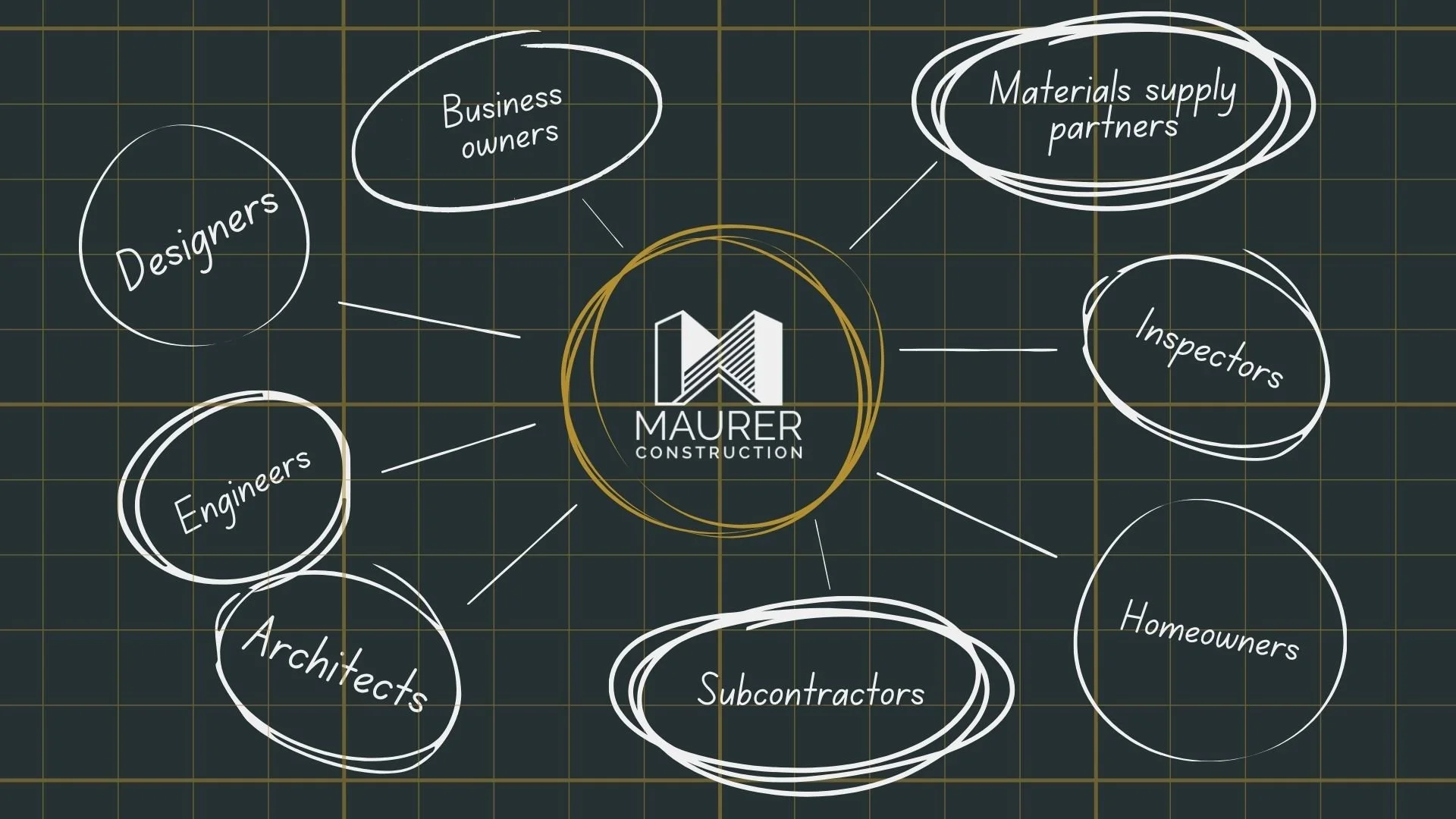
A general contractor absorbs all this complexity from the business owner. We can communicate our client’s vision to architects and engineers to get plans drawn up, and then can find and schedule the right tradespeople for the job with clear instructions. Handling challenges and finding solutions when things break or go wrong is no small part of the job either.
One of the main benefits to business owners is that using a GC reduces your risk. We hold the general liability and worker’s compensation insurance, taking liability off the back of the business owner. Maurer Construction ONLY uses contractors that hold general liability and worker’s comp insurance for double the insurance. We also set the quality standards of the job. We verify the quality of the subs we hire, and then manage materials and on-site conditions as the job goes on.
How to find a general contractor for your project
If you’re starting from square one, you can always go to Google and search “general contractor near me” as a starting point. You’ll be able to find ratings and reviews of general contractors in your area.
Word of mouth and personal recommendations are another way to find a general contractor you can trust and get an idea of the quality of their work ahead on similar projects to yours. Many of our clients have come to us recommended by other clients!
With any new project, it’s a good idea to talk to at least a few GCs to get an idea of their schedule, pricing and quality of work. It’s also important not to rely solely on online reviews. You can verify their license on city and county contractor lists and check for any liens, lawsuits or unresolved complaints related to their work on Casenet.
We would also caution potential clients to be careful of just going with the lowest bid. If one number is much lower than the other bids you’ve received, it can be a warning sign that the contractor may have missed a portion of the scope of work or are using subpar materials or subcontractors. We go over red and green flags to look for during the bid process in our blog post here.
The “less sexy” side of general contractor work
If you’ve ever wondered what a general contractor does when they’re not on the job site, you’re not alone! There is lots of behind the scenes work that keeps general contracting businesses running smoothly so your construction projects are able to be completed on schedule.
Scheduling jobs and subs, hiring, maintaining insurance, advertising, taxes, and the paperwork involved in bidding jobs takes up a huge portion of our time behind a desk. Vehicle and tool maintenance is also a big one—having the right equipment and keeping it in good working condition can make or break a project.
Like any other business we have to think about the smaller stuff that keeps us running. Our markup on jobs is what keeps us in business. Everything we do, from driving to the job site to taking a 15 minute phone call, needs to have a profit margin. That markup percentage you see on your construction project needs to cover subcontractors fees, our time to manage the job, material and tool costs, and also general business costs like desk chairs, pens and pencils, post-its, computers, phones, and a coffee machine :)
General contractors manage all this for their own business so you don’t have to. Especially when it comes to the things that directly affect construction jobs like insurance, permits, vehicles, tools, rentals, and hiring subcontractors, having someone who knows what they’re doing and has done it many times before is incredibly valuable.
Need to talk to a general contractor about a project?
As a licensed and insured general contractor in St. Louis, we’ve worked on hundreds of remodels, renovations and other building projects. We’re a great resource whether you’re just starting to envision what you want and want to get a feel for timeline and pricing, or if you already have plans drawn up and need someone to execute. Call 314-366-0213 to talk to Nick.